Image Credit: Unsplash
A memorable dinner gathering comes together through thoughtful details that make guests feel comfortable, curious and welcome. Food matters, of course, but lighting, table styling and easy conversation shape the experience just as much. A few creative choices can transform a familiar dining room without demanding a large budget or days of preparation.
Set the Mood with Ambient Lighting
Start by switching off bright overhead lights. They tend to flatten the room and can make an evening meal feel more functional than inviting. Instead, build several smaller pools of warm light around the dining area.
Place unscented taper candles along the table, keeping them below eye level so guests can see each other clearly. A nearby lamp fitted with a warm white bulb will soften dark corners, while cordless table lamps can illuminate a sideboard or drinks station. If you have dimmers, test the room after sunset and adjust them before anyone arrives. For more inspiration, these home decor ideas for adding elegance through lighting and thoughtful accessories offer practical ways to create a comfortable and inviting atmosphere.
Aim for enough light to show the colors and textures of the food without creating glare. Glass candleholders can multiply the glow, though a mix of ceramic and metal holders often looks more relaxed. Keep scented candles out of the dining area because strong fragrance can compete with the meal. One subtle source of natural scent, such as a small pot of rosemary near an open window, is plenty.
Curate a Texture-Rich Tablescape
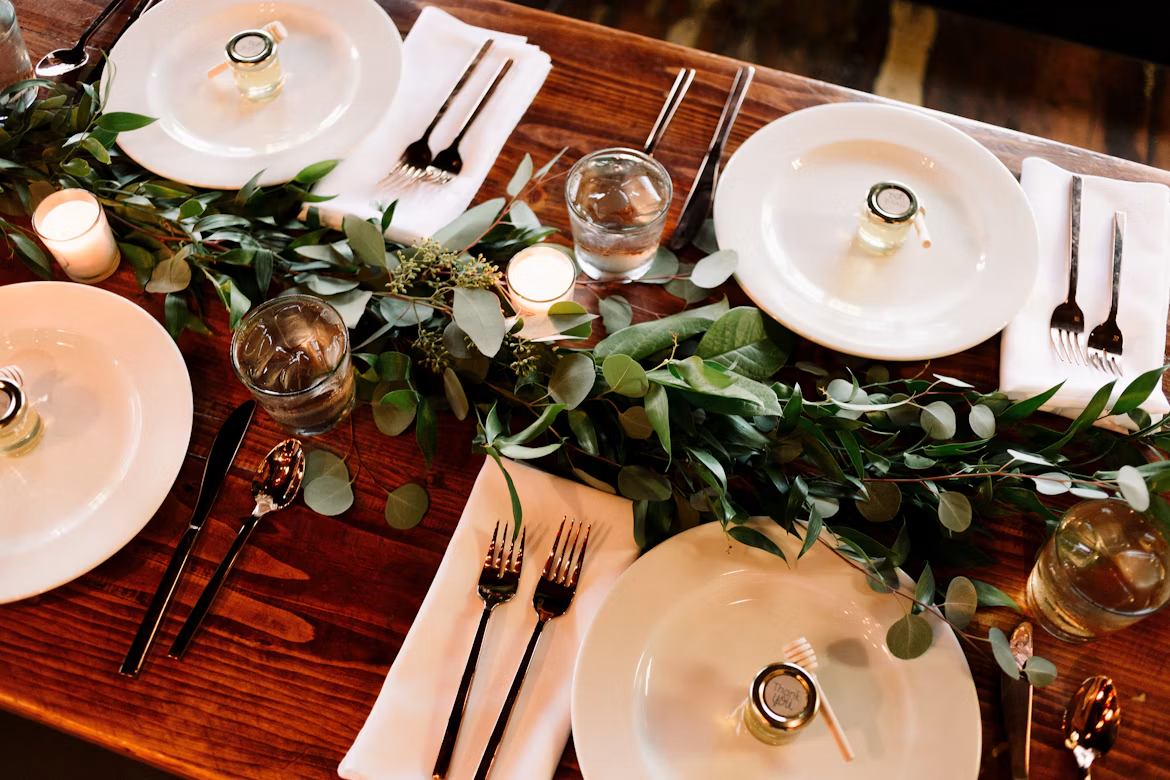
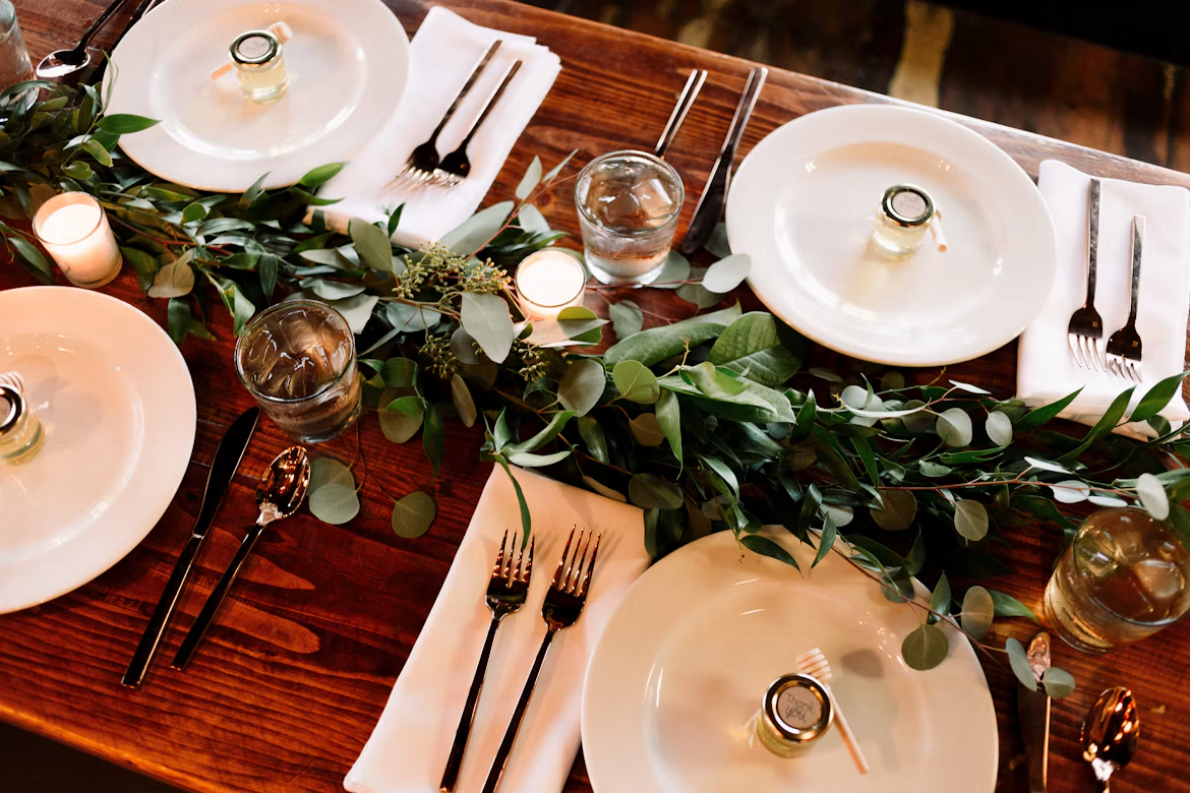
A beautiful table gains depth through texture. Layer a linen runner over bare wood, pair smooth plates with woven placemats or use softly crumpled napkins beside polished flatware. Two or three contrasting materials will usually create more impact than a crowded collection of decorative objects.
The most useful tablescape ideas treat everyday pieces as part of the design. A wooden serving board, handmade bowl or stack of small ceramic dishes can contribute shape and character while still earning its place at dinner. Repeating one color across several objects helps varied materials feel connected.
Allow for practical space too. Guests need room for glasses, shared dishes and their hands. If the centerpiece has to be moved as soon as dinner begins, it’s too large. Try placing a line of small bud vases down the center, each holding one stem or a clipped branch. For extra guidance, these table setting ideas show how simple arrangements can support different dinner party styles.
Introduce Unexpected Artisanal Pours
An unusual pour can become a natural talking point, especially when it has a clear ingredient story or connection to a particular maker. Offer a small, edited selection so guests can explore something new without facing an elaborate menu.
For adults who choose to drink, locally produced honey wine brings a distinctive honey-based flavor to the table. Serve modest tasting portions and explain the flavor profile in plain language, such as floral, spiced or fruit-forward. A small card beside the bottle can help guests know what to expect without turning dinner into a formal tasting.
Give alcohol-free choices the same care. Sparkling water with cucumber ribbons, chilled pear juice with fresh thyme or a tart hibiscus infusion can look considered when served in proper glassware. Provide water from the beginning and keep every option easy to reach.
Pair pours with one element of the menu instead of attempting a match for every course. A floral drink may complement a cheese plate, while a crisp citrus option can refresh the palate alongside rich roasted vegetables.
Play with Shared Platter Styling
Shared platters make dinner feel generous and encourage interaction across the table. Their impact comes from shape, height and color, so plan the arrangement before adding garnishes.
Begin with a platter large enough to leave a visible border. Arrange the main component first, then add vegetables, herbs or sauces in defined clusters. A dish of roasted squash, for example, looks especially inviting when layered over whipped feta and finished with toasted seeds and parsley. Keep edible elements recognizable so guests can see what they’re selecting.
Use odd numbers when grouping smaller items. Three bowls of dips or five pieces of flatbread often look more natural than rigid pairs. Serving spoons should sit on or beside each platter, with handles facing outward for easy use.
Consider how the dishes will travel around the table. Heavy casseroles can remain on a nearby sideboard while lighter salads and breads circulate among guests. If the table is narrow, serve the main course on two medium platters placed at opposite ends. This prevents one dish from becoming a bottleneck and helps everyone begin eating at roughly the same time.
Keep Conversation Flowing Naturally
Comfortable conversation starts with a thoughtful seating arrangement. Place quieter guests beside people who ask open, attentive questions and separate close friends who might otherwise form a private discussion. Couples don’t always need to sit together, particularly when everyone already knows one another.
Keep a few prompts in mind, but skip formal conversation cards unless they suit the group. Ask about a recent local discovery, a meal someone still remembers or a creative project they’d like to try. These topics invite stories without placing anyone under pressure. Avoid subjects likely to divide the table unless your guests enjoy spirited debate and know each other well.
The host’s pace also influences the room. Leaving a comfortable pause between courses gives people time to finish a story, while clearing every plate the moment someone puts down a fork can make the evening feel rushed. Accept help when it’s offered, though there’s no need to bring the whole group into the kitchen.
Once dessert arrives, let the table loosen naturally. Fresh tea, a small plate of fruit and the last candle burning low can give a good conversation space to reach its own ending.