Image Credit: Unsplash
Daily blow-drying can leave hair smooth and polished without causing avoidable dryness, breakage or frizz. The result depends on your heat styling habits, including how you prepare damp hair, direct airflow and care for the finished style.
Hair type matters too. Fine strands may need lower temperatures and less product, while thick or tightly curled hair often benefits from controlled sectioning and steady airflow. A few practical adjustments can reduce repeated stress without adding much time to your morning routine.
Signs of Cumulative Thermal Stress
Early thermal damage can look like ordinary dryness. You may notice rough ends, extra tangling or short broken hairs around the hairline. Hair that once held shine may also appear dull because its outer cuticle no longer lies flat.
Pay attention to changes over several weeks. If your ends split soon after a trim or sections feel brittle while wet, review your styling temperature and frequency. Reduced curl definition and persistent flyaways can also signal stress.
A simple strand check helps. Compare a frequently styled front section with hair underneath, where heat exposure is lower. A clear difference in softness or elasticity suggests your routine needs adjusting.
Prep Strands with Lightweight Barriers
Gently remove excess water before reaching for the dryer. Press hair with a microfibre towel or soft cotton T-shirt instead of rubbing it, which can roughen the cuticle and create tangles before styling begins. Hair should be damp, not dripping.
Apply a heat-protective product from mid-lengths to ends, following the amount listed on the label. Fine hair may only need a light spray, while coarse or porous strands may respond better to a small amount of cream. Too much product can weigh hair down and extend drying time.
Detangle with a wide-tooth comb, starting at the ends. Divide thick hair into manageable sections so each area dries evenly and you don’t repeatedly pass hot air over strands that are already dry.
Smart Airflow Over Excessive Heat
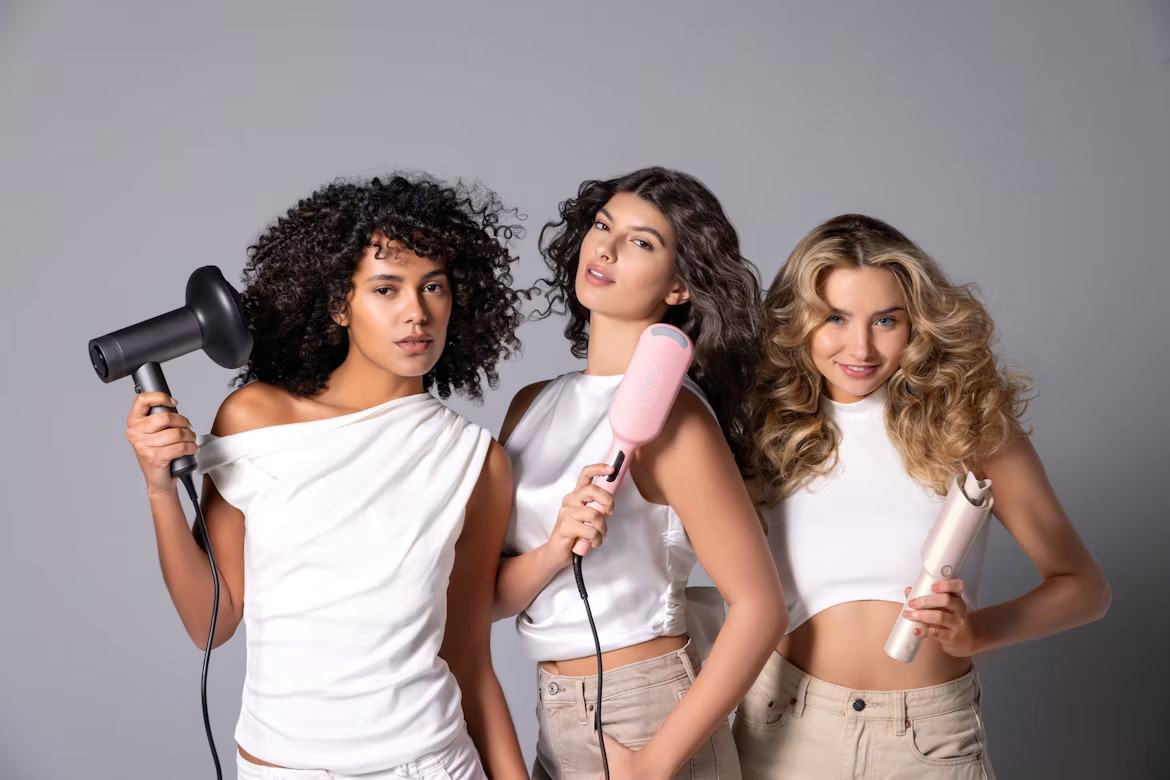
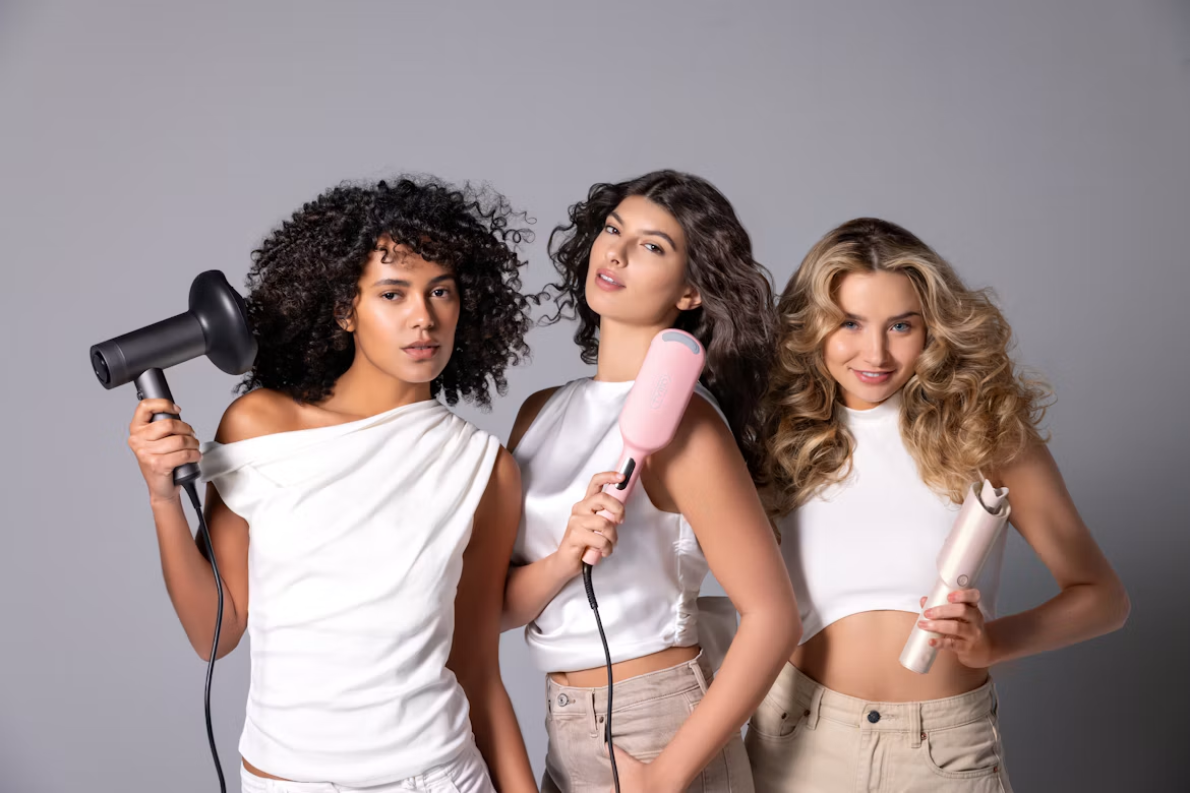
Efficient drying comes from controlled airflow and consistent movement. Begin with a medium heat setting and hold the dryer about 15 centimetres from your hair. Direct air from roots towards ends to encourage the cuticle to sit flatter, then keep the dryer moving so one spot doesn’t absorb prolonged heat.
Tool features can make this easier. If you’re comparing dryers or trying to understand what is an ionic hair dryer, consider adjustable temperature settings and airflow controls alongside the technology itself. These controls let you tailor the routine to your hair’s density and condition.
Use higher airflow before raising the temperature. Finish each section when it’s dry, since extra passes rarely improve the shape and may increase moisture loss.
Post-Blowout Maintenance That Works
Let hair cool fully before tying it up, adding more product or stepping into a humid bathroom. Cooling helps the finished shape settle and reduces the temptation to restyle sections immediately. A cool-shot setting can speed up this stage and add a smoother appearance.
At night, use a loose scrunchie or soft wrap that won’t leave a sharp crease. A smooth pillowcase may also reduce overnight friction, especially if your hair tangles easily. In the morning, refresh flattened areas with a brush and brief cool airflow instead of repeating the full blowout.
Regular trims will remove split ends, but they can’t reverse damage higher along the strand. If your hair remains brittle despite lower temperatures, give it several heat-free days and simplify your routine until softness improves.
The most useful benchmark is how your hair feels after a month, not how sleek it looks for one afternoon. When the ends remain flexible and the style lasts into the next day, your heat and airflow settings are likely working well.