A home studio should help you focus, protect your equipment and stay comfortable through long creative sessions. The best setup doesn’t require a huge spare room or an expensive renovation. A well-chosen corner can work beautifully if its layout supports how you paint, record, photograph, or design. Start with the practical foundations, then add storage and decorative touches once you know how the room functions from day to day.
Define Your Dedicated Work Zone
Choose a space where you can leave essential items set up between sessions. Packing everything away each evening creates friction and makes it harder to follow a quick burst of creativity. A spare bedroom is ideal, though an alcove, enclosed veranda or quiet corner of a living area can also work.
Measure the available floor space before buying furniture. Mark out a desk, chair and storage units with painter’s tape so you can test the flow of the room. Keep frequently used tools within arm’s reach and place occasional-use supplies higher up or in labelled tubs. If cost is a concern, this guide to a budget home studio offers practical ideas for prioritising purchases.
Protect Valuable Creative Gear
Creative equipment can represent years of careful investment, so plan secure storage early. Keep cameras, laptops, microphones and portable tools in closed cupboards when they’re not being used. Cabinets should be anchored to the wall and positioned away from visible windows. Maintain a simple inventory with model numbers, receipts and dated photographs, then store a digital copy outside the studio. For additional ideas on protecting your workspace, read this guide to integrating digital and physical home security.
Review the room’s doors and windows as well. If a lock sticks, the door doesn’t close properly, or you’re unsure who has old keys, a qualified locksmith can assess the locks and recommend suitable security improvements for your studio.
Protect files alongside physical equipment. Use automatic cloud backups for current work and keep a second copy on an external drive stored away from the computer.
Balance Natural Light and Privacy
Position your main work surface where daylight reaches it from the side. This reduces screen glare and prevents your hands or equipment from casting strong shadows across the project. South-facing light is often softer and more consistent in Australia, while direct afternoon sun can heat a room quickly and alter how colours appear.
Install adjustable blinds or lined curtains so you can control brightness and block the view from outside after dark. A sheer layer allows daylight in during the day without putting every shelf on display. For evening work, combine a general ceiling light with an adjustable desk lamp. Choose bulbs with similar colour temperatures throughout the room, as mixing warm and cool lighting can make visual work harder to judge.
Cable Management and Ergonomics
Run power and data cables along walls or beneath the desk, using removable clips to stop them trailing across walkways. Avoid overloading one outlet with computers, lights and other high-use equipment. Power boards should have overload protection and enough spacing for each plug without stacked adaptors.
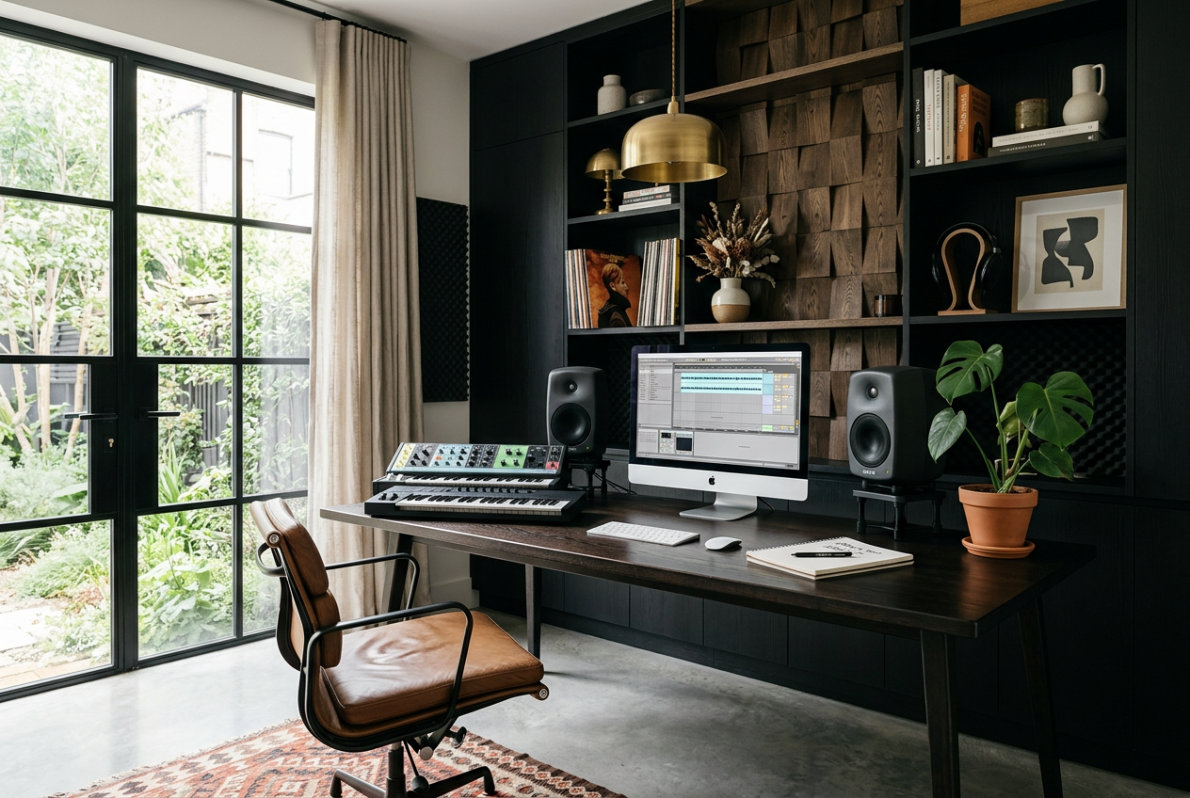
Set the desk and chair around your body before arranging decorative objects. Your elbows should sit close to a 90-degree angle while working, and the top of your monitor should be near eye level. A beginner home studio guide can help you think through equipment placement and room layout.
If you switch between drawing, editing and recording, create small activity zones. A rolling trolley can hold tools for the current task, while monitor arms and adjustable stands free up desk space. Take regular movement breaks and keep heavier items between knee and shoulder height to limit awkward lifting.
A productive studio feels easy to enter and simple to reset. At the end of each session, return tools to their assigned places, clear the main work surface and check that valuable equipment is secure. That five-minute routine leaves the room ready for your next idea instead of yesterday’s clutter.