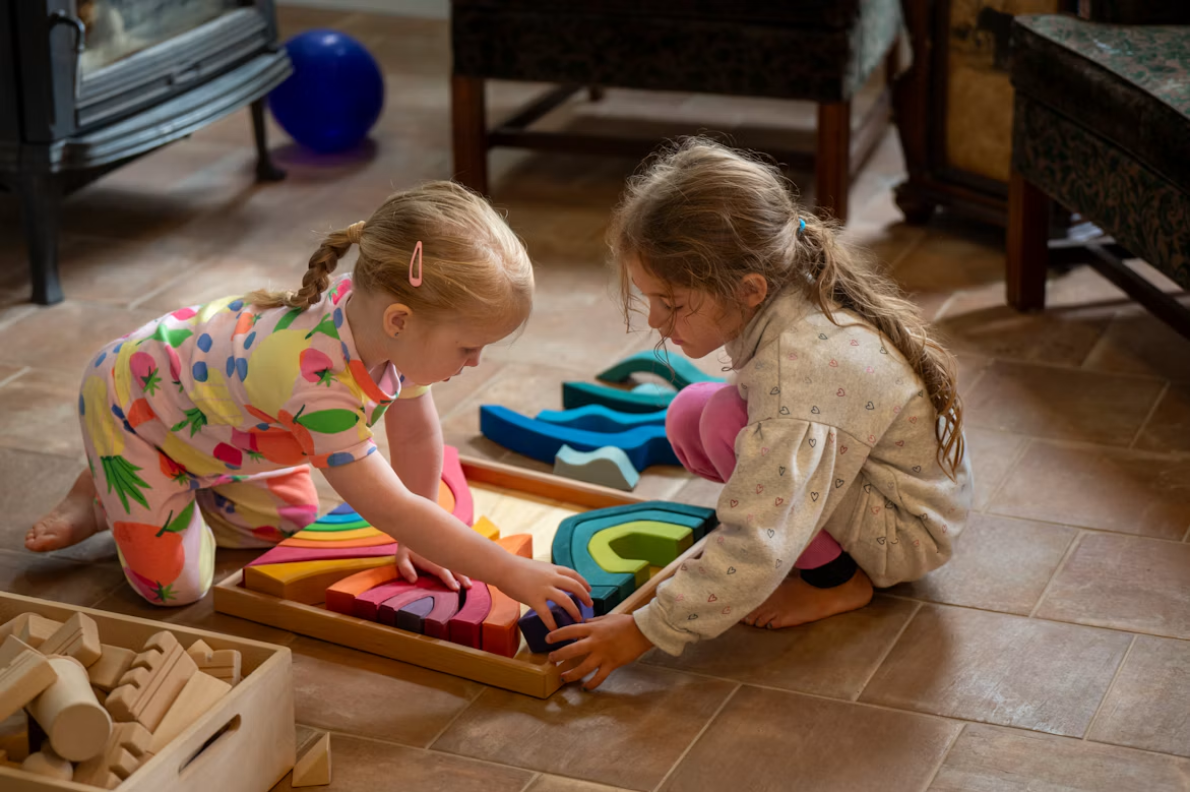
Image Credit: Unsplash
Play gives young children a practical way to understand ideas that are still too complex to explain in words. As they stack blocks, invent characters and sort objects, they test cause and effect while practising communication, movement and emotional control.
The best creative toys support this natural curiosity without dictating a single correct outcome. They leave enough room for children to make choices, solve small problems and return to the activity with a fresh idea tomorrow.
Unlocking Imagination Through Play
Imaginative play often begins with ordinary objects. A wooden block becomes a phone, a toy figure goes shopping and a cardboard box turns into a busy café. These simple transformations help children practise symbolic thinking, which is the ability to let one object or action represent something else. That same skill later supports reading, writing and mathematical understanding.
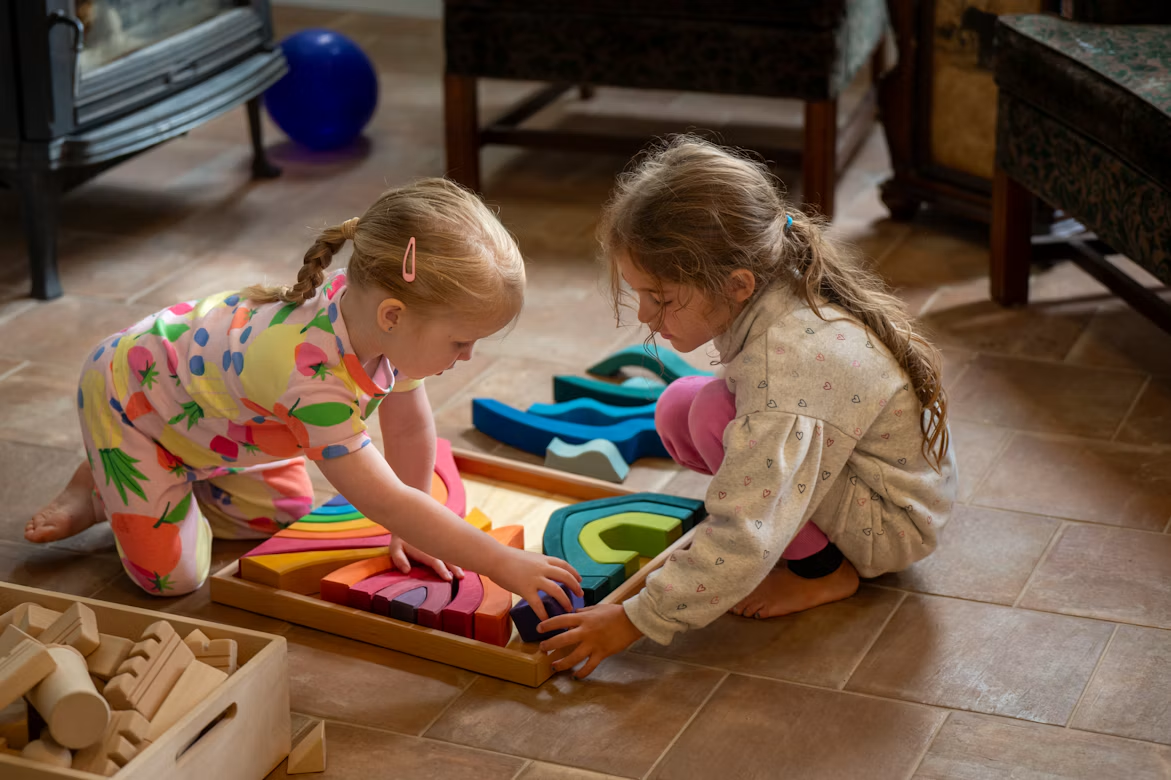
Imaginative play also supports social development. When two children create a pretend shop, they need to decide who will serve customers, what the products cost and how their shared story will unfold. Small disagreements give them a safe opportunity to negotiate, listen and consider another person’s idea. You can learn more about the cognitive and social benefits of imaginative play at https://www.klaschools.com/insights/toddler-imaginative-play-key-to-cognitive-and-social-growth
Adults can encourage this process without taking control. Place a few open-ended items within reach, then let the child decide what they represent. Fabric scraps, animal figures, stacking cups and wooden vehicles can all inspire different stories from one day to the next.
If a child asks you to join, follow their lead. You might describe what your character is doing or ask one simple question such as, ‘Where is the train going?’ Leave enough space for the child to supply the destination, the passengers and any unexpected events along the way. That freedom keeps the play genuinely creative.
Educational Toys for Growing Minds
An educational toy should invite active participation. Toys with flashing lights or automatic sounds can attract attention, but the strongest learning often occurs when a child must move, arrange, compare or imagine something for themselves. Shape sorters, puzzles, construction pieces and matching games all ask children to notice patterns and test possible solutions.
Look for a toy that matches the child’s current abilities while allowing room for growth. A two-year-old might enjoy placing large pieces in a row, while an older preschooler may use the same set to identify letters, create sequences or tell a detailed story. Toys that support several types of play tend to stay useful for longer.
Personalised options can bring early literacy into familiar play. For example, parents and gift-givers can use the train builder at https://nametraindepot.com.au/ to select letter carriages that spell a child’s name, then add an engine, caboose or Australian animal-themed carriage. Seeing those familiar letters during play can encourage children to notice their order and sound, although adults should keep the experience relaxed and enjoyable.
Exploration, repetition and interaction all contribute to how children learn through play. For further guidance on these elements, visit https://pedsav.com/the-power-of-play-how-kids-learn-and-grow/. You can support them by rotating a small selection of toys every week or two. A toy that has been out of sight for a while often feels new again, prompting another round of investigation without filling the room with extra clutter.
Developing Fine Motor Skills
Fine motor skills involve the small muscles of the hands, fingers and wrists. Children rely on them to turn pages, hold cutlery, fasten clothing and eventually control a pencil. Creative play builds these abilities through repeated movements that feel purposeful and enjoyable.
Connecting pieces, turning puzzle parts and arranging small objects all strengthen hand-eye coordination. A child fitting a carriage into place must judge its position, adjust their grip and use the right amount of pressure. Repeating that action builds accuracy over time. Modelling dough is another useful option because squeezing, rolling and pinching provide resistance for developing fingers.
Choose pieces that suit the child’s age and stage, and check the manufacturer’s guidance for small parts. Close supervision matters when younger children are playing with objects that could go into their mouths. A stable table, uncluttered floor space and good lighting also make detailed activities easier.
You can extend fine motor play with simple household materials. Try transferring large pom-poms between bowls with tongs, threading thick pasta onto a cord or placing pegs around the edge of a container. Keep sessions brief if the child’s hands become tired. Ten engaged minutes can be more productive than a longer activity that ends in frustration.
Watch how the child approaches each task before stepping in. If they’re struggling, demonstrate the movement slowly once, then return the materials. Time to experiment helps them adjust their own technique and experience the satisfaction of completing the action independently.
The Joy of Personalised Learning
Children tend to pay closer attention when an activity connects with something familiar. Their own name is often one of the first written words they recognise, partly because they see and hear it so frequently. Names may appear on bedroom doors, artwork, bags and childcare labels, creating repeated opportunities to connect spoken sounds with printed letters. For related ideas on improving a child’s bedroom, visit https://dianepenelope.com/bedroom-upgrades-for-a-more-restful-sleep/.
Personalised play can use this familiarity without turning playtime into a formal lesson. Start by saying the name slowly and pointing to each letter. An older child might arrange the letters in order, look for repeated shapes or find the initial letter elsewhere in the room. If they lose interest, let the activity return to storytelling or free construction.
Pretend play gives children the freedom to explore situations at their own pace. More information about its developmental value is available at https://childmind.org/article/the-power-of-pretend-play-for-children/. A toy associated with a child’s name can become a character, a vehicle or part of a larger make-believe town. This sense of ownership may prompt richer stories because the child sees a direct connection between the object and their own experience.
Personalisation can also help siblings or children in a group recognise their belongings. Still, shared play remains valuable. Invite children to combine their pieces, build a longer sequence or create a story involving everyone’s names.
Keep expectations realistic. A toddler may recognise only the first letter, while a preschooler might name every letter without yet understanding all its sounds. Respond to what the child notices and offer one small piece of information at a time. Positive attention keeps curiosity alive more effectively than correcting every mistake.
Beyond Entertainment: Lasting Value
A toy’s lasting value depends on how often it can support a new challenge. Open-ended pieces may begin as objects to grasp and move, then become sorting tools, story prompts or building materials. This progression allows the toy to stay relevant as language, coordination and imagination develop.
Quality also matters when toys are expected to survive years of use. Check for secure joins, smooth surfaces and finishes intended for children. Store complete sets together in an accessible basket or low shelf so the child can choose and pack away their activity. Caring for toys can become part of play, especially when children have a clear place for each item.
Early play experiences support creativity from birth to three by giving children regular chances to observe, repeat and experiment. Creativity and development also emphasise the importance of responsive interaction with caregivers. A thoughtful comment from you, such as noticing that a tower has grown taller, can add useful language without interrupting concentration.
Avoid measuring value only by the number of advertised features. Notice what the child actually does with the toy after the novelty fades. Do they return to it, change the rules, combine it with other objects or include it in stories? Those behaviours show that the material is supporting flexible thought.
A well-chosen creative toy may eventually carry memories as well as developmental value. Years later, a familiar letter carriage or carefully built structure can remind a family of the first name a child learnt to recognise, the stories they invented and the capable hands that once worked hard to fit each piece into place.