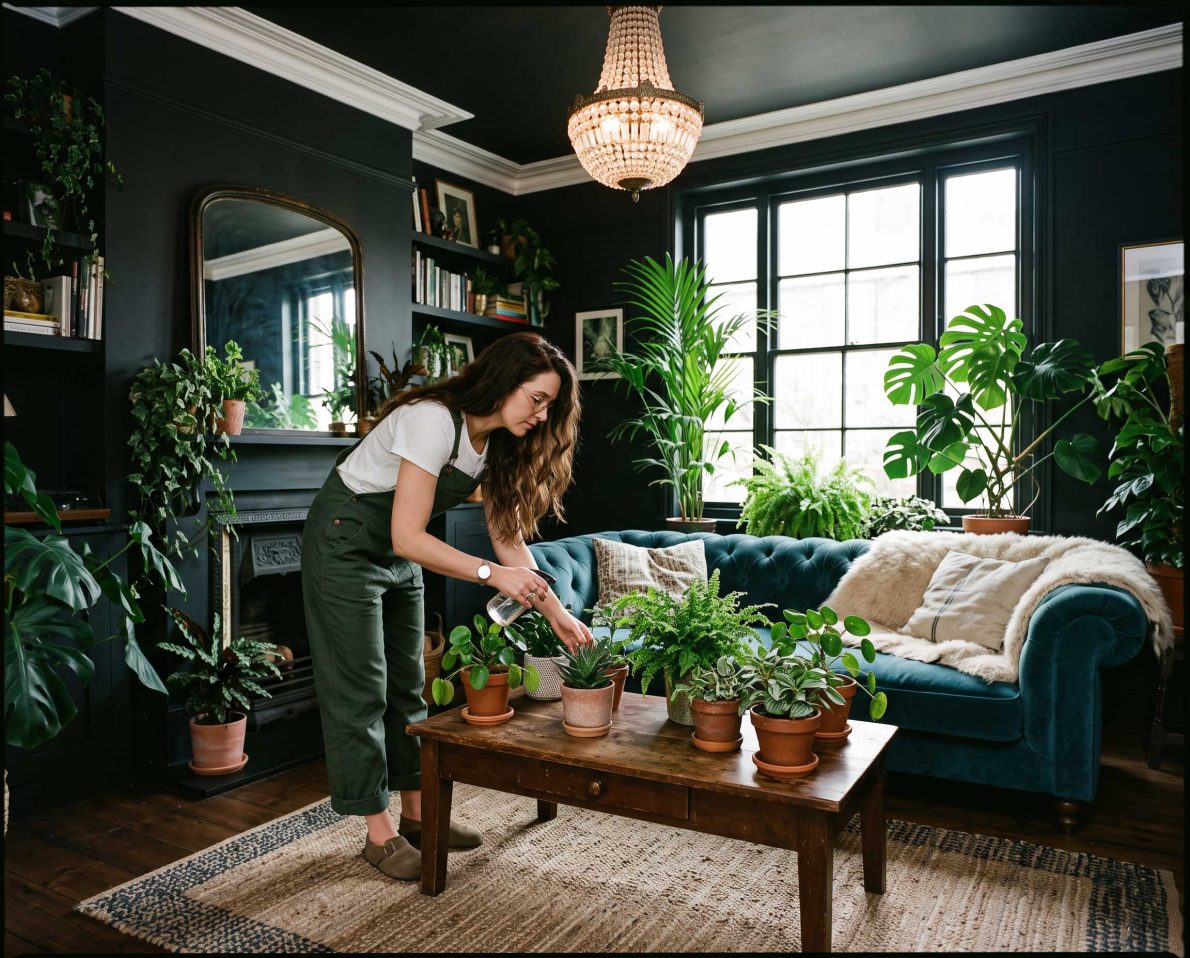
Indoor greenery brings color, shape and softness to a minimalist room without filling it with decorative objects. The key is to treat each plant as part of the overall composition, giving it enough space to be noticed.
A few deliberate choices can create a calmer result than a collection gathered without a plan. Consider the room’s light, proportions and existing materials before selecting plants or pots. This keeps the arrangement practical as well as visually refined, helping you ensure clutter stays away.
Less Clutter, Better Focus
Start with one focal plant and assess the room before adding another. This approach reflects the principles of minimalist home design, where each item has a clear purpose and enough surrounding space to make an impact.
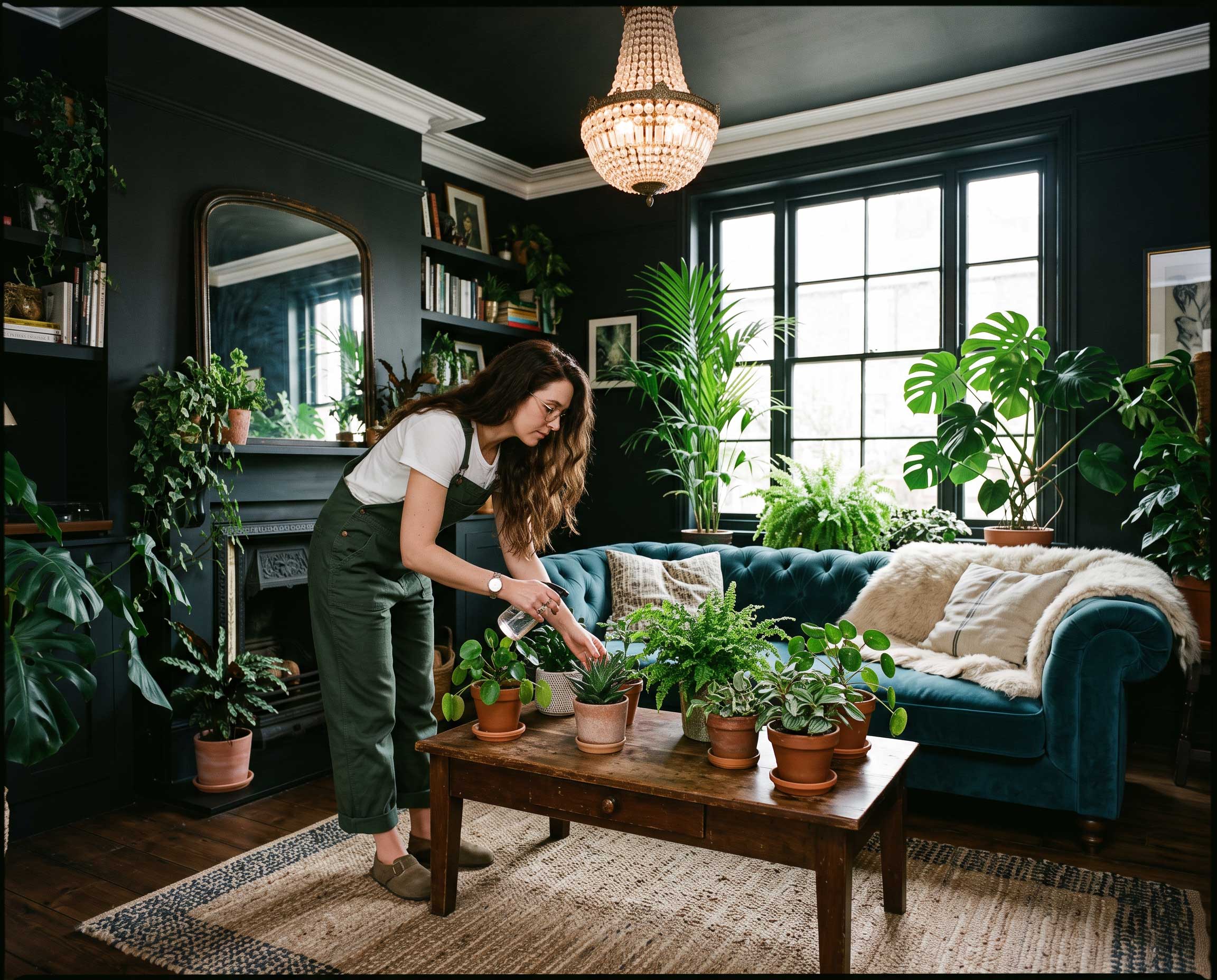
In a living room, place a tall plant beside a low sofa or near an empty corner. Keep coffee tables and shelves largely clear, especially if the plant has wide or trailing foliage. Grouping every small pot on one surface often creates visual noise, so limit a shelf display to one plant alongside one or two useful objects.
Check the view from the doorway too. A strong silhouette usually feels more composed when it isn’t competing with cords, baskets or stacks of magazines.
Balancing Texture and Architectural Lines
Plants can soften the straight edges found in modern interiors, but their growth habits should complement the room. A snake plant’s upright leaves suit narrow spaces and echo vertical window frames. A trailing plant works well on a high shelf, where its stems break up a long horizontal line.
The same principle applies when arranging several plants. Pair one large-leaf variety with a finer, more delicate form instead of choosing three plants with similar foliage. Guidance on minimalist interior design also emphasizes clean lines and intentional selections, which can help you judge when a room has enough detail.
If local shops don’t carry the size or form you need, an online plant delivery service can help you compare indoor plants and arrange delivery, including same-day options in Melbourne where available.
Ordering Specimen Plants Responsibly
A specimen plant is usually larger, older or visually distinctive, so check its practical requirements before ordering. Measure the intended position, including the plant’s expected width, the pot’s diameter and clearance from nearby furniture. A plant listed as 120 centimeters tall may still dominate a compact room once its leaves spread outward.
Review the light at that exact spot over a full day. “Bright indirect light” generally describes a position near a well-lit window without prolonged harsh sun hitting the leaves. Also consider heating vents, air-conditioning and pets.
Ask how the plant will be packaged and what to do when it arrives. Give it several days to adjust before repotting or moving it repeatedly. This short settling period reduces unnecessary stress and lets you inspect moisture levels, leaf condition and stability.
Vessel Choices That Elevate Modern Decor
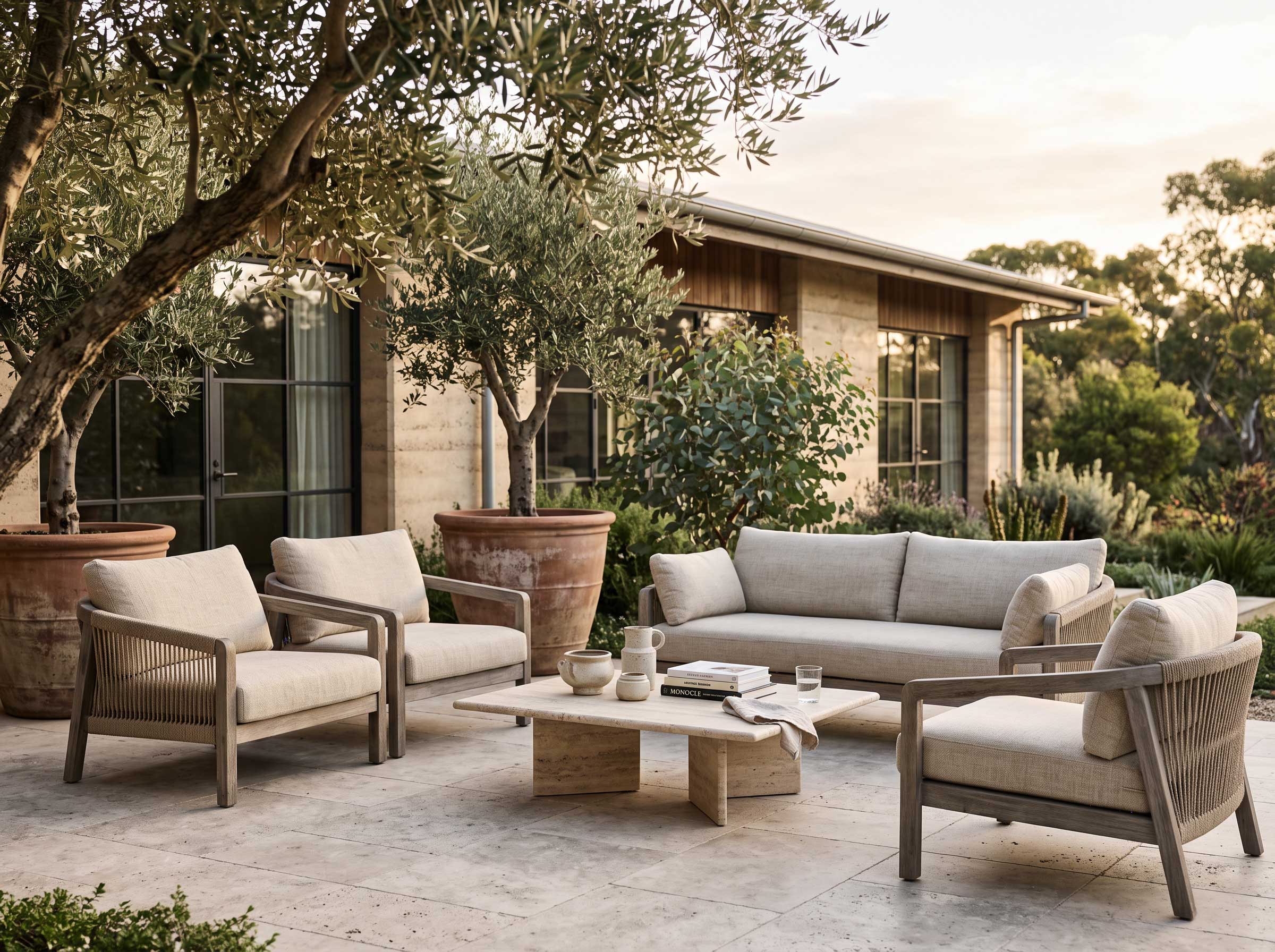
The container affects a plant’s appearance almost as much as the foliage. Matte ceramic, softly textured stone and simple metal planters work particularly well in modern rooms because they add subtle interest without becoming the main feature.
Choose a pot that relates to something already present. A warm clay tone can pick up timber flooring, while an off-white vessel may connect with pale walls or upholstery. Avoid matching every pot exactly. Repeating one feature, such as color family or finish, creates consistency while allowing slight differences in shape.
Drainage still matters. Keep the plant in a nursery pot inside a decorative cover pot if the outer vessel has no drainage hole. Remove it for watering, let excess water drain fully and return it only when the base is dry.
Giving Each Plant Room to Belong
Leave enough open floor and wall space around each plant for its outline to remain visible. As a practical guide, allow at least 15 to 30 centimeters between foliage and nearby furnishings for medium plants, then increase that distance for broad-leaf varieties.
Revisit the arrangement as plants grow. Rotate pots every week or two for more even growth and prune damaged leaves with clean tools. If a plant begins blocking a walkway or pressing against a wall, move it before its shape becomes distorted.
A minimalist display should still feel lived-in, so small signs of natural growth aren’t flaws. One healthy plant in a well-chosen vessel can give an overlooked corner all the detail it needs.