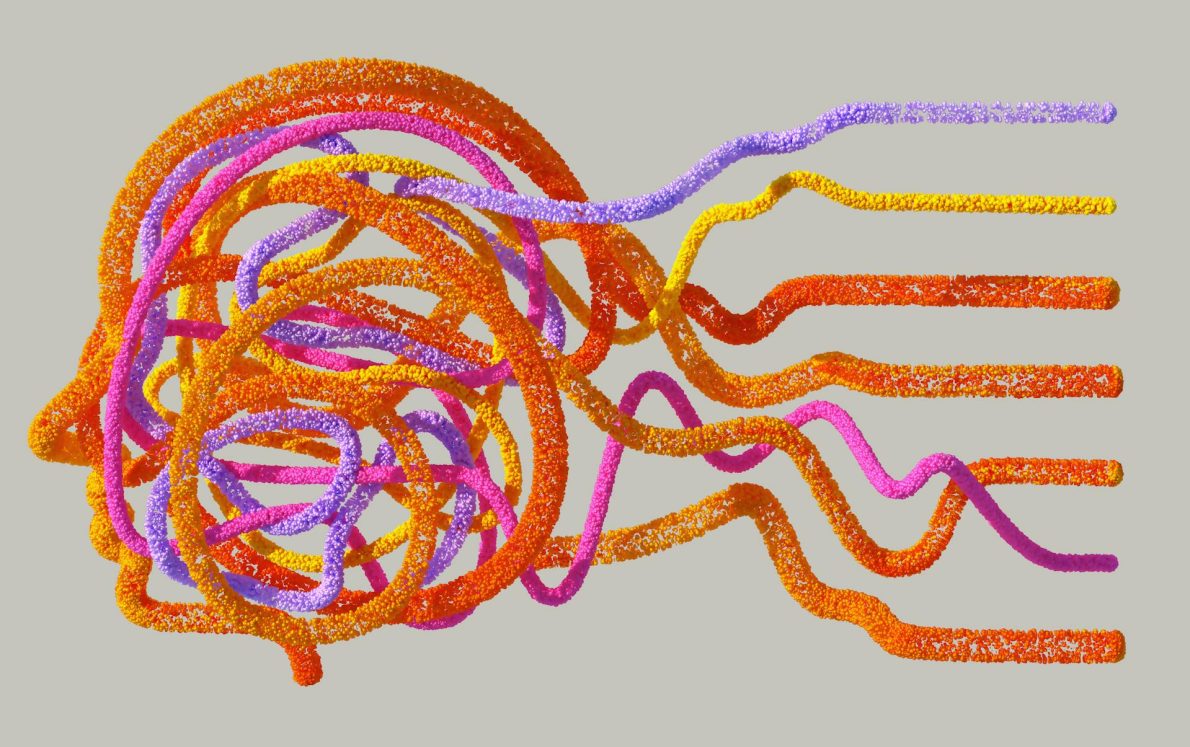
To be honest, I didn’t know if I should write this publicly, but I think the story is important. I’m a 56 year old woman, who, on the surface, is ticking along OK. But something still wasn’t right, (even after many, many sessions of EMDR and trauma-informed therapy to unravel my past – but that’s story in itself and not one I’m ready to share).
Starting the Journey
A couple of years ago, my daughter raised the idea of autism spectrum disorder (ASD) and ADHD (Attention Deficit Hyperactivity Disorder) in women. She’d met a close male relative who, for privacy/legal reasons, will remain unnamed – but who, even to the untrained eye, has many obvious autistic traits and immediately whispered: “He’s so autistic”. When my daughter first raised the issue that she may be autistic, I’m embarrassed to say, I laughed. I said, “no, you don’t have ASD or ADHD, you are just like me, it’s just our personality”. What I didn’t realise in that throwaway sentence, was that as a Gen X mum, it was both false, minimising and invalidating.
Research AUDHD Style
I did ponder on it, and did some research. By research, I mean 9 pm – 3 am deep dives headlong down a rabbit hole of research papers, AI summaries, scholarly articles, blog posts, YouTube videos and burrowed into my Instagram algorithm, plus read the ICD-11 and DSM-5 diagnostic criteria for each. I followed this up with trips to the library, scouring books on neurodivergence, ASD and ADHD in women. Ironically, this research in itself wasn’t just a “quirk”. This is fairly characteristic of the combined type of ADHD and ASD. In the same way, my obsession with genealogy takes up a lot of spare time. When I raise the subject, my daughter rolls her eyes. “Special interests” – another hallmark of the neurodivergent brain.
Misdiagnosis – More Common Than You Think
At the time, I had been seeing a psychiatrist, who misdiagnosed my early perimenopause, undiagnosed autoimmune condition, fatigue, and complex PTSD as a “mood disorder”, dosing me with huge quantities of inappropriate and damaging drugs, turning me into a complete zombie, for over 14 years. She kept increasing the dose, because the drugs were not “working”. After 14 years of trusting her diagnosis, I asked her for help coming off these drugs due to serious side effects, one of which was a 30kg weight gain. This mental health professional said (and I quote verbatim) “You can be fat or mad – it’s your choice”. I was confused, doubted my reality and instincts, but decided then and there, she was not the right doctor for me.
Unseen and Invalidated By Professional Bias
I mentioned to this doctor, in passing, that my daughter had started down the diagnostic path for ASD and ADHD and that I want to explore this as a possible direction. I wasn’t diagnosing myself, I just knew that I fit most of the diagnostic criteria, it was hereditary in many cases, and I had several family members who had been diagnosed and treated and responding well. The psychiatrist’s reaction was extreme. She first laughed. Then she grew irrationally angry, speaking to me as you would a naughty child. She said “I’ve known you for “X” years. If you were autistic or had ADHD, I’d have seen it. You don’t have it”.
Following Instincts
I did, however, decide to wean off the drugs she’d prescribed. I had little to no help. The drug companies don’t want you to come off them; there is no information. Doctors are not trained. The lowest doses aren’t low enough. I cut tablets in half, and in half again, just guessing. My cognitive function returned. I could think again. I started to lose weight, and I was binge eating less in the evenings. I had brain zaps, over time, but they faded. I started to feel emotion again. My instincts were stronger. As the dose got lower and lower, my mood didn’t go up and down. In fact, I felt more myself. A few years later, I am completely free of those drugs, a healthy weight, with normal cholesterol and no mood swings. And I can sleep.
Sorting Out The Tendrils of Trauma Versus Neurodivergence
Anyway, that’s a bit of background. I went on a mental health plan and started seeing a psychologist for the anxiety. She wasn’t particularly good, yawning broadly during one telehealth session. She did one thing right, though. She confessed she wasn’t qualified to treat CPTSD and referred me to an incredible professional, I’ll call her Anthea, who specialises in trauma-informed therapies. Over the next few weeks, my story unfolded. She was the first therapist who asked if I was comfortable. I mentioned that I struggled with overhead lights. She turned on a side lamp, sometimes not even that. She seemed to understand I struggled with certain lighting, sounds, smells and textures and we worked around those. As small as that lighting change was, it helped me unwind and feel seen and cared for. I only mention the CPTSD diagnosis here, as there is an overlap of symptoms, and I needed to figure out what was trauma and what was neurodivergence. I didn’t want yet another incorrect diagnosis.
Getting Help From Victim Services
I used up all my Medicare subsidised sessions. Anthea suggested that I contact Victims Services, as victims of crime in NSW are eligible for 22 sessions of subsidised counselling. My first response was “But I’m not a victim of a crime” as there was no court case, and when I had gone to the police about my childhood “events” at 18, I was told there was no proof – it was his word against mine, and another young relative incidentally, as he did he same thing to her, but apparently the word of two women against one man was not enough in 1992. Anthea said, “You absolutely are a victim of multiple crimes”. I applied that night. I was accepted the following morning. I paid full price for quite a few sessions, which was a struggle but worth every cent. It took 8 weeks for Anthea to be accepted as an official counsellor through Victim’s Services. I am so grateful to her for doing this. I am about halfway through these sessions and still have some work on the CPTSD. I’ll discuss that in another blog post or maybe a book – still figuring it out.
Trauma Informed Therapy
Over 37 very painful but rewarding and life-changing sessions of EMDR, IFS and DBR (you can look these up if you are interested), I was able to untangle what was trauma and what was something else entirely. I’d had therapy before, and can rattle off my history like a documentary, but it’s always just made it feel worse. CBT does not fix trauma. I cannot emphasise that enough.
Masking and Looking “Normal”
Back to the “something else”. I’ve spent a lifetime working hard to fit in and look normal. I’ve forced myself to sit still, fidget subtly, and get my energy out at the pool or gym. I’ve done degrees where I do entire semesters of hard academic work in the last 2 weeks, fuelled by the sheer terror of failure, forgoing sleep, food, and social activities. And I’ve done really well. Distinctions, high distinctions. I thought this was just a quirk. I have a colour-coded wardrobe, as my mornings were so chaotic that I created a system to smooth the creases of indecision of what to wear each day. As a child, I drew up detailed lists of what needed to happen to get ready for school (as an only child Gen X, I made my own lunches, breakfasts, and got myself to and from school). Without knowing it, I built highly effective scaffolding for my neurodivergence, just to survive. I have lost my wallet countless times, locked myself out of my apartment, lost the car, forgotten to pay bills, and, left groceries at the supermarket. But with technology and smart phones, I have alarms, reminders, and autopayments so I can manage life.
Academically, I did well. I read the school library dry. I pored over encyclopedias, I loved learning, but with a caveat. Only if I were interested in it. I swam 5 days a week and raced on Saturdays. I’d pick up hobbies and do them obsessively for 6 months then drop them like they were nothing. As painter at art college, my paintings got smaller and smaller, as I needed to paint perfectly and I’d start at the top right and paint to the bottom left. My brush became a 000, which is essentially 1 hair. None of this was terribly problematic, apart from sleep. On the surface, it all looked fine. I made things look effortless, I was fit and healthy, until I wasn’t. I was just a bit obsessive, “a creative type”.
Social Deficits and Academic Giftedness
Socially, I struggled. It was masked because of alcohol, party drugs, and I was moderately pretty, so I could fight my social anxiety with flirting and using the men as a cover story for my social failings. Or I’d take recreational drugs, which strangely calmed me down. I remember commenting on this once, and someone joked I probably had ADHD. I was 25. That was silly, ADHD was the little boy who caused trouble in the classroom, not an academically “gifted”, outwardly gregarious party girl working in a bar, art student or graphic designer. The issue was that I was so good at “being social” that I oscillated from being obnoxiously outgoing to being completely unable to move, leave my home, or even speak. I’d call off social events because I had nothing left. Nothing. But no one saw that, and I thought everyone was like this.
Friendship and Communication Issues
I’ve burnt out so many friendships that I truly valued, because I couldn’t keep up, or I’d offend people by misreading a situation. I would make eye contact, but couldn’t take in the words being said. I’d meet people, but forget their names instantly, because I was looking at their eyes, their microexpressions, figuring out how to relate. I’d be so intent on monitoring their body language and mirroring their movements that I’d often miss the conversation or, if I could keep up, end up so tired that I’d deem it too much work. I’m not a good conversationalist. I despise small talk, it bores me more than anything. But if the conversation is interesting, I get overexcited. I talk over the top of people, I finish their sentences. I hear myself do it, hate that I do it, but cannot stop, because I am terrified I’ll forget what I was going to say. My processing brain went a million miles an hour, but my working memory was not great. I went off on tangents that made perfect sense to me, and other people like me, but I knew I irritated people socially. And the sad part is, I saw it in real time, I just couldn’t stop.
The Superpowers
At work, I negotiated my way through. I saw and see patterns everywhere, recognise trends, was and am obsessed by data and the story it tells, and visually driven, obessed by typography, and was and am very good at picking up new technology as soon as it hits. I navigated computers, the internet, social media and now AI. I could code and design. I could see stuff well before others. I have been very fortunate in my career. Except for the period where I was on those drugs for the non-existent mood disorder, which was so damaging to my cognitive function. That was a very dark period and one I am glad I trusted my intincts and got rid of that psychiatrist. People say currently, I get lucky with my AI image and video generation because I get good results. But they don’t see me at 2 am researching prompting structures, how AI works, reading the terms and conditions, researching legal cases, intellectual property and how to put the tools together, mapping out the process in my head (to the exclusion of friends, food and water) so I can use these tools ethically, legally and have fun.
Being a Neurodivergent Parent to A Neurodivergent Child
I am a parent to a neurodivergent child (although I didn’t know it when she was little – she was in her 20’s when diagnosed). Fortunately, I gave her tools that I didn’t know were tools – I passed on my strategies that I didn’t know were strategies. I was a deeply flawed mother, but I loved my child so much, I hope that my mistakes made up for that. Watercolour pencils at 3, sight words plastered all over the kitchen walls, investing in a swimming coach because the pool was sensory overload for both of us, pulling her out of Nippers because of sensory overload, changing her high school in a week, leaving the mall quickly because of sensory overload. Not buying her wool, avoiding squeaky sand, understanding her weekly room rearranging, thinking that lining up toys in size, colour and emotional attachment was a perfectly reasonable thing to do. Washing her hair so carefully because the water on her face was unbearable. Indulging her latest obsession. Taking her to Paris to see art on a whim. implicitly understanding why she hated overhead lights and dining tables (having to interact with multiple people while eating). Understanding the sensation seeking of chilli on food. Allowing her to do anything she could independently, so she had confidence in her ability. Teaching her to glaze oil paint. Trying to explain to her bewildered father, she’s just overwhelmed; it’s not a tantrum. Knowing why she needed absolute silence one minute, yet blaring music the next. She was just sensitive. I’d been the same. It’s just our personality.
Could It Be Both?
Fast forward, and my very smart therapist, Anthea, suggested that I may have a combination of ASD AND ADHD on top of the obvious CPTSD. She ran some through screens over time to chart my symptoms of CPTSD, and they have improved dramatically with her help. She also screened me with, I think, 7 different tests for ASD and ADHD. I’d done a few free ones online and they’d been pretty conclusive, but they weren’t offical tools so I didn’t take them seriously. Anthea’s results showed on charts, I was in the 99th percentile for the AD part and the HD part, and similarly for ASD. The part I found that was interesting was that I was in the 94th percentile for masking traits (traits that my previous psychiatrist said was rubbish). She recommended that I get a formal diagnosis from a psychiatrist, which was yesterday. To be honest, I think I was fairly textbook. The paradox was that because I am very determined and relatively intelligent, I’d been able to still do OK in my career and be a parent, but it is like running a marathon in lead boots. Yes, I did it, but I’ve worked so hard for so long and I’m always so tired. He prescribed me the usual drugs (stimulants) to see if they help. I took one yesterday, and it calmed me down. I got stuff done, nothing irritated me, and I didn’t feel overwhelmed.
Drugs don’t really help with ASD as far as I know, except to manage anxiety and things like that. I have a bit of work to do there to “unmask” with the people I feel safe around, so it’s not so much effort to be with the people I love. I want to just relax.
The Best Intentions
At work, of course, masking is a given. Looking “normal” although it is clear at work that I am far from this. I explain to people that I can be blunt and not to take it personally. Sometimes my words and expressions don’t match my intention, but I do my best to have people’s feelings and best interests at heart – especially with the people I manage and the younger people I work with. At the end of the week, I’ve got nothing left, so I need to learn to manage this.
Disability or superpower?
I will say, though, as much as “they” call this a disability, for me, it can be a superpower. I work fast. Really fast. But I am like a cheetah, I only have so much sprint in me. I can develop the most intricate and effective working systems, I can look at data and see problems and potential, months ahead, I can see people and predict issues long before there’s a problem. I see potential in people ahead of time. I can visualise an entire campaign on my way to work. The issue is, that once I solve the problem, I have no more passion for it, and I’m onto the next problem to solve. This was an issue early in my career, but as a manager, I can have wonderful people who pick up the rest of the big projects and help me with the execution and detail.
Grief and Hope
I’m still figuring out what this diagnosis means and how I feel about it. I feel grief for the little girl who was told in school reports, “Attitude ranges from excellence to insolence” or “Diane is exceptionally gifted, but only when she applies herself”, for asking difficult questions in class or explaining to teachers that something wasn’t correct (no teacher likes this). Not knowing the social rules that other people seem to be born with made me feel like everyone else got the instruction book, and I was trying to put myself and life together like an Ikea bookcase without the allen keys. I feel grief for lost opportunities, for jobs I lost because I took people at face value, didn’t read the room or didn’t understand political dynamics. Anger at professionals who ignored my instincts. I’m not sure who to tell, who will see it as political leverage or take advantage, or those who will say “well that explains a lot” and forgive my many flaws, but also see my gifts and blessings.