
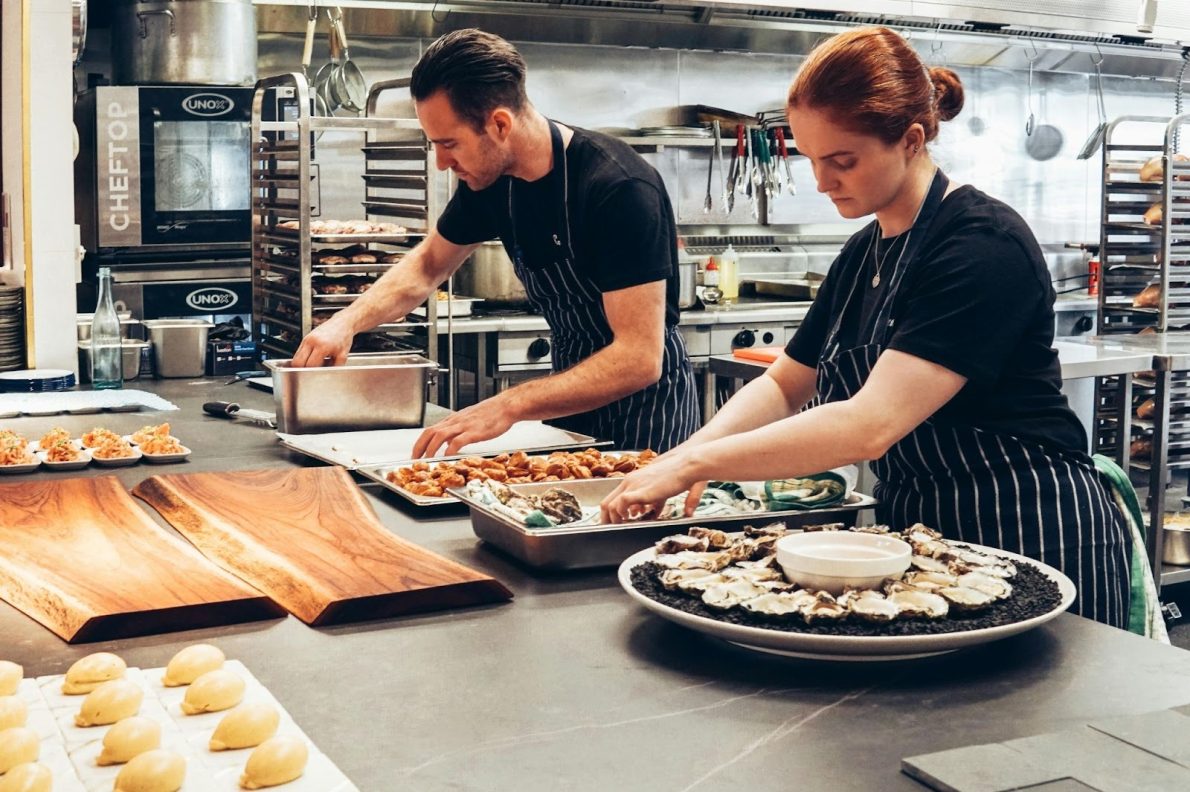
If you’ve ever spent time in a commercial kitchen, you’ll know that things can get very busy very quickly – orders start coming in, people are moving around all the time, and everyone’s trying to do three things at once. However, when everything’s properly organised, it can actually all run surprisingly smoothly, and it’s only when there’s no organisation that it can start to get problematic. With that in mind, let’s take a look at some simple ways to improve commercial kitchen efficiency.
Make Sure Everything Has A Place
One of the quickest ways to really slow a kitchen down is when people can’t find what they need, and if someone’s got to open all the cupboards to find an ingredients or they’re checking multiple fridges for a dish, the time is going to add up quickly, especially during a busy service.
Having a clear system where everything lives in the same place every day makes a massive difference because when chefs know where the ingredients are, as well as utensils, and equipment, they don’t have to stop and think about it – they can just grab what they need and carry on working. That can remove a lot of unnecessary stress all by itself.
Think About How Ingredients Are Stored
Storage is another thing that can definitely help a kitchen run smoothly or make life harder than it needs to be. If your containers don’t stack well, for example, or there are labels missing, or things get pushed to the back and forgotten about, it can make things really confusing during service.
That’s why good commercial food storage is crucial – proper containers, clear labelling, and a logical system for where ingredients are kept means staff can find what they need quickly without disrupting the rest of the kitchen, and as long as everyone follows the same system, things can stay well organised for a long time.
Do As Much Prep As You Can Early
Preparation is one of those things that experienced kitchens really rely on – if vegetables are already chopped, sauces are prepared, and ingredients are portioned out before service even starts, the whole cooking process becomes a lot faster.
Without that preparation, you’ll often find that staff end up rushing to do everything at once once orders start coming in, and that’s when mistakes happen and everyone gets really stressed. However, having a structured prep routine earlier in the day means the team can focus on cooking during service rather than still trying to get ingredients ready.
Keep The Workflow Sensible
Another thing that can affect efficiency is the layout of the kitchen itself because if people constantly have to cross the room to collect ingredients or tools, those extra steps are going to add up during the day, and not in a good way.
That’s why it’s wise to think about a sensible workflow, which means prep areas, cooking stations, and storage are all arranged in a way that matches how the kitchen actually operates. In the end the best layout is usually the one that reduces how much walking around people have to do.